
Many maritime workers injured on Louisiana waterways do not realize they may have important rights under federal maritime law after accidents involving tugboats, barges, crew boats, dredging vessels, shipyards, docks, and other maritime worksites.
When people hear the term “offshore accident,” they often think of catastrophic disasters far out in the Gulf of Mexico, events like the Deepwater Horizon oil spill and the Seacor Power accident that dominate national headlines and lead to years of litigation.
However, many Louisiana maritime accidents happen much closer to shore.
Across the state, maritime workers are injured every day on docks, terminals, shipyards, and vessels closer to the coast and on inland waterways. Louisiana’s maritime economy depends on commercial traffic moving through the Mississippi River, Intracoastal Waterway, ports, canals, and industrial corridors. These environments can be just as dangerous as offshore drilling operations, and the legal issues that follow an accident are often just as complex.
Even workers who never set foot on a deepwater drilling rig may still have legal rights under federal maritime laws such as the Jones Act or the Longshore and Harbor Workers’ Compensation Act (LHWCA).
At Herman, Katz, Gisleson & Cain (HKGC), our Louisiana offshore accident attorneys understand that maritime injury claims rarely fit into a simple category. They often involve overlapping laws, multiple contractors, vessel ownership disputes, and aggressive efforts by employers or insurers to limit liability after serious accidents.
Maritime Accidents on Louisiana Waterways Can Be Just as Dangerous as Offshore Rig Incidents
Louisiana’s waterways support one of the largest maritime industries in the country. While offshore oil and gas operations remain a major part of that economy, thousands of maritime workers spend their careers operating much closer to land.
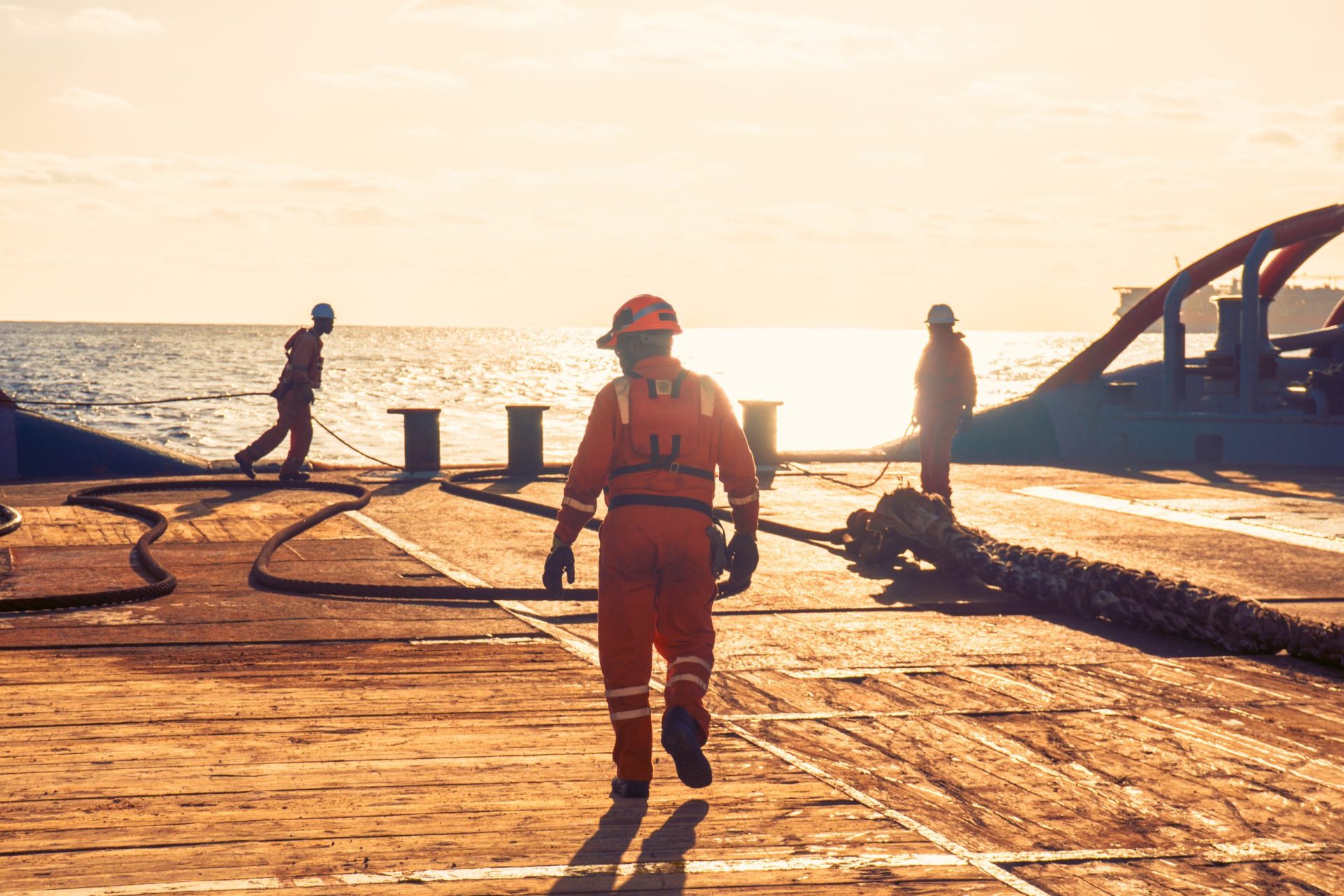
Tugboat crews move cargo along rivers and canals. Dredge workers maintain shipping channels and waterways. Crew boats transport workers and supplies across inland waters and offshore routes. Harbor workers, repair crews, and dock employees load cargo, service vessels, and work around heavy industrial equipment near navigable waters every day.
These jobs are physically demanding and frequently dangerous. Workers often face long shifts, hazardous weather, moving machinery, unstable surfaces, heavy tow lines, electrical hazards, and the constant risks associated with working around vessels and water.
When serious accidents occur, the consequences can be catastrophic. Maritime workers frequently suffer traumatic brain injuries, spinal cord injuries, amputations, crush injuries, severe burns, orthopedic trauma, and fatal injuries.
Tugboat, Barge, Dredging, and Crew Boat Accidents Can Lead to Serious Maritime Injury Claims
Some of the most serious Louisiana maritime accidents we’ve handled at our firm involve vessels operating on inland waterways rather than offshore drilling platforms.
Barge and tugboat crews routinely work in tight quarters around powerful equipment and high-tension lines while navigating crowded waterways and changing conditions. A single operational mistake, mechanical failure, or unsafe work practice can lead to devastating injuries.
Similarly, dredging operations present substantial risks to workers responsible for maintaining Louisiana’s ports and navigation channels. Dredge workers often perform dangerous tasks involving cranes, pumps, pipelines, heavy machinery, and vessel transfers. Falls overboard, equipment failures, explosions, and electrocution hazards are not uncommon in these environments.
Transportation vessels and crew boats also create significant injury risks. Workers may be hurt during vessel transfers, while loading cargo, or during collisions and rough waters. Even accidents like these, which occur relatively close to shore, can still fall under federal maritime law. And, in many cases, determining exactly which laws apply becomes one of the most contested issues in offshore injury litigation.
Jones Act and LHWCA Claims Often Apply After Louisiana Maritime Accidents
One of the most important questions after a maritime accident is whether the injured worker qualifies as a seaman under the Jones Act or falls under another maritime law.
The answer is not always straightforward.
Some offshore workers spend nearly all of their time aboard vessels in navigation. Others split their duties between vessels, docks, terminals, shipyards, and land-based facilities. Employers and insurance companies frequently dispute worker classifications because the outcome can significantly impact the damages available in the case.
Under the Jones Act, qualifying maritime workers may pursue negligence claims against their employers and seek compensation for medical expenses, lost wages, future earning capacity, pain and suffering, and other damages.
Other injured maritime workers may instead fall under the Longshore and Harbor Workers’ Compensation Act (LHWCA), a federal compensation system that commonly applies to harbor workers, ship repair workers, dock employees, and loading crews.
Even when a worker receives LHWCA benefits, additional third-party claims may still exist against vessel owners, contractors, equipment manufacturers, or other responsible parties.
Because maritime injury claims often involve multiple companies operating simultaneously on the water, identifying all potentially liable parties is a critical part of the offshore injury investigation.
Fatal Offshore Accidents May Lead to Wrongful Death Claims Under Maritime Law
Fatal maritime accidents can create even more complicated legal issues for surviving family members.
When a death occurs beyond three nautical miles from U.S. shores, surviving relatives may have claims under the Death on the High Seas Act (DOHSA), a federal law governing certain fatal offshore accidents.
DOHSA claims often arise after:
- Vessel sinkings
- Offshore transportation accidents
- Explosions and fires
- Helicopter crashes
- Fatal drilling or construction incidents at sea
These cases frequently involve extensive federal investigations, multiple corporate defendants, and highly contested questions regarding maritime jurisdiction and recoverable damages.
Families dealing with fatal maritime accidents are often forced to navigate not only devastating personal loss, but also complicated legal and insurance disputes involving large maritime companies and their insurers.
Why Injured Maritime Workers Need an Experienced Louisiana Offshore Accident Attorney
After a serious maritime accident, injured workers are often at an immediate disadvantage. Vessel owners, offshore employers, and insurance companies may begin investigating the incident within hours while simultaneously working to minimize liability and control the narrative surrounding what happened.
In many cases, critical evidence must be preserved quickly. Vessel logs, maintenance records, inspection reports, electronic tracking data, surveillance footage, and witness statements can all become important in determining how an accident occurred and who may be responsible.
Maritime employers and insurers may also dispute whether a worker qualifies for protections under the Jones Act or other federal maritime laws. Worker classification issues can significantly impact the compensation available after a serious injury or fatal accident.
Unlike ordinary workplace injury claims, offshore and maritime cases frequently involve multiple contractors, vessel operators, and third-party companies working together on the same project or vessel. Determining who controlled operations, who was responsible for safety procedures, and whether equipment failures or negligence contributed to the accident often requires an extensive investigation.
Because maritime law is highly specialized, injured workers and their families navigating these legal issues alone can quickly become overwhelmed. This is why it’s important to hire an offshore accident attorney.
An experienced lawyer at a firm like HKGC understands the unique legal issues arising in offshore and maritime litigation in Louisiana. Our firm has extensive experience handling complex maritime injury and wrongful death litigation involving tugboats, barges, dredging vessels, transportation boats, industrial operations, and offshore worksites throughout Louisiana and the Gulf Coast.
Speak with a Louisiana Offshore and Maritime Accident Lawyer at HKGC
Serious maritime accidents don’t only happen on offshore drilling rigs far out in the Gulf. Workers are injured every day on Louisiana’s rivers, ports, canals, dredging operations, tugboats, barges, docks, and transportation vessels.
After a serious offshore or maritime accident, injured workers and families are often left dealing with medical treatment, lost income, employer investigations, insurance companies, and uncertainty about what legal rights may apply to their situation. Maritime cases can quickly become complicated, especially when multiple companies, federal laws, and questions about vessel status or worker classification are involved.
Let the attorneys at Herman, Katz, Gisleson & Cain help shoulder that burden. Our firm can investigate the circumstances surrounding the accident, preserve critical evidence, identify potentially responsible parties, and determine which maritime laws may apply to your case. We handle the legal complexities so injured workers and families can focus on recovery. Contact us online, via live chat, or call 844-943-7626 for more information.
Other Offshore-Maritime Accidents News
Offshore work is one of the most dangerous professions in the country, and workers and their families may not fully realize the risks until it’s too late.
Offshore accidents can cause irreversible injuries even if someone survives. If you or someone you know has been injured in an offshore accident, you may wonder if you should hire an offshore accident attorney.
One of the greatest risks of offshore injuries isn’t when workers are performing their duties – it’s when they are transported to offshore job sites. Reports show that most offshore worker fatalities occur during travel to and from work.
U.S. maritime law protects offshore workers on vessels flying an American flag, and legal recourse is available for injured workers or the families of those fatally injured. But what about employees on foreign-flagged ships, which lack American safety and liability requirements?
Understanding who qualifies as a seaman under the Jones Act is important because offshore workers are not covered by workers’ compensation. When an offshore accident happens, workers may be able to sue their employer for personal injuries under the Jones Act.